Cursor
Cursor works with One Horizon in two ways. Through the MCP connector, Cursor chat can read and update your work while you code. As a local agent, the Cursor CLI runs queued work on your machine. The two are set up separately.
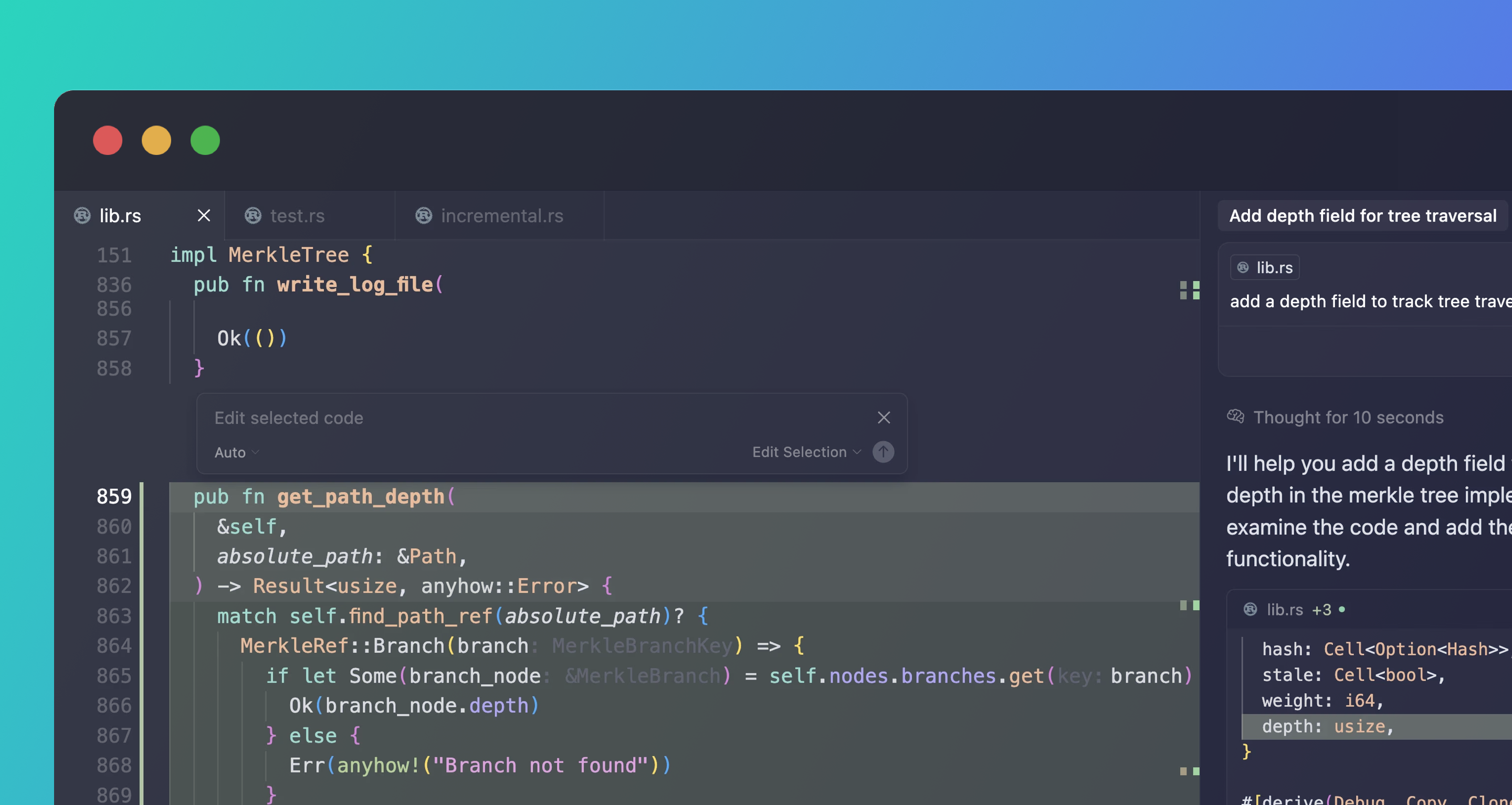
Choose how to use Cursor
| Path | Best for | What happens |
|---|---|---|
| MCP connector | Working inside Cursor chat. | Cursor can find assigned work, read work details, and capture completed work while you stay in the editor. |
| Local Cursor agent | Letting Cursor work from a One Horizon task. | One Horizon starts the Cursor CLI on your machine, sends the work item as the brief, and records progress on the run. |
Start with the work item
The initiative, bug, or todo is the prompt source for both MCP chat and local agent runs. Add the outcome, important files or links, constraints, and what counts as done. For planned implementation work, follow spec-driven development: specific enough for Cursor to act, short enough for a person to review.
Connect Cursor through MCP
The install button adds the MCP server to Cursor:
Install with Cursor
Manual installation
Create ~/.cursor/mcp.json in your home directory for all your projects, or .cursor/mcp.json at the project root for one project. Add this configuration:
{ "mcpServers": { "one_horizon": { "command": "npx", "args": [ "mcp-remote@latest", "https://mcp.onehorizon.ai/mcp" ] } }}
Activate in Cursor
Open a chat in Cursor and enable the tool if it is not already active. Try asking "show my planned work for this week". On the first call, Cursor opens a browser window to sign in and authorize the connection.
What you can ask Cursor
"show my assigned issues and todos for today"
Cursor pulls your in-flight issues from tools like Linear or Jira and summarizes them.
"use my assigned work details for the gateway API"
Cursor pulls those details into context so it writes code with the right scope and names.
"capture this as completed work"
Cursor summarizes what it wrote and adds a completed task.
Security and permissions
The connector acts on your behalf. Data access follows your roles, workspace membership, and granted scopes.
Run Cursor as a local agent
A local Cursor agent works through a task outside the editor chat. After setup, open an initiative, bug, or todo, choose Send to, and pick your Cursor agent. The run stays tied to that work item.
Local Cursor agents use the Cursor CLI, not the Cursor IDE MCP connector. Installing the editor and configuring MCP does not install or sign in the CLI.
Install the Cursor CLI
Check whether the CLI is already available in the terminal where you run one agent or start Desktop agents:
agent --versionSome installs expose cursor-agent instead of agent. Desktop setup checks for the same binary before it can start a Cursor agent.
If the command is missing, install the Cursor CLI:
curl https://cursor.com/install -fsS | bashSee the Cursor CLI installation page. If the installer puts agent in ~/.local/bin, add that directory to your PATH.
Sign in to the Cursor CLI
Authenticate the CLI before you set up a local agent:
agent statusagent login
Or set CURSOR_API_KEY from Cursor Settings → Integrations → User API Keys. One Horizon does not store Cursor credentials.
If a browser cannot open from the terminal, run NO_OPEN_BROWSER=1 agent login and open the printed URL yourself.
When authentication is missing, setup or a run may fail with:
Cursor CLI is not authenticated on this machine. Run
agent login, or setCURSOR_API_KEYfrom Cursor Settings → Integrations → User API Keys, then retry.
Run one agent doctor to confirm the CLI is on PATH and authenticated before setup.
Set up in Desktop or the CLI
For guided setup in Desktop, open Workflows, go to the agents page, select Add agent, and choose Cursor. Pick a task mode, set Agent access, choose the repository folder, and decide whether One Horizon should create PRs or MRs after successful runs. The same setup modal is available from an agent step in the workflow designer.
From the terminal:
one agent createone agent doctorone agent watch
Workflow steps can target the same agent. Local Agents covers presets, access levels, worktrees, and pull request settings, and Monitoring covers the run lifecycle and recovery actions.
During a run, the agent temporarily adds One Horizon's tools to the task worktree's .cursor/mcp.json. No token is written into that file. The session's Capabilities tab shows which MCP servers the run used; see Agent capabilities.
Local agents are experimental. Keep tasks small and review code, tests, and pull requests before you merge.
Load workspace capabilities in sessions you start yourself
One Horizon Desktop can connect Cursor so sessions you start yourself load the skills, MCP servers, and plugins your workspace assigns to that repository. Open Settings → Integrations → Coding tools, then select Connect on Cursor. Without Desktop, run one capabilities connect cursor. Sessions One Horizon starts for you load capabilities without this step.
Cursor shows Not qualified yet until One Horizon has tested the installed version, and Connect stays unavailable until then. Agent capabilities covers repository assignments and each status.