Your Backlog Is Now Part of Your AI Security Boundary
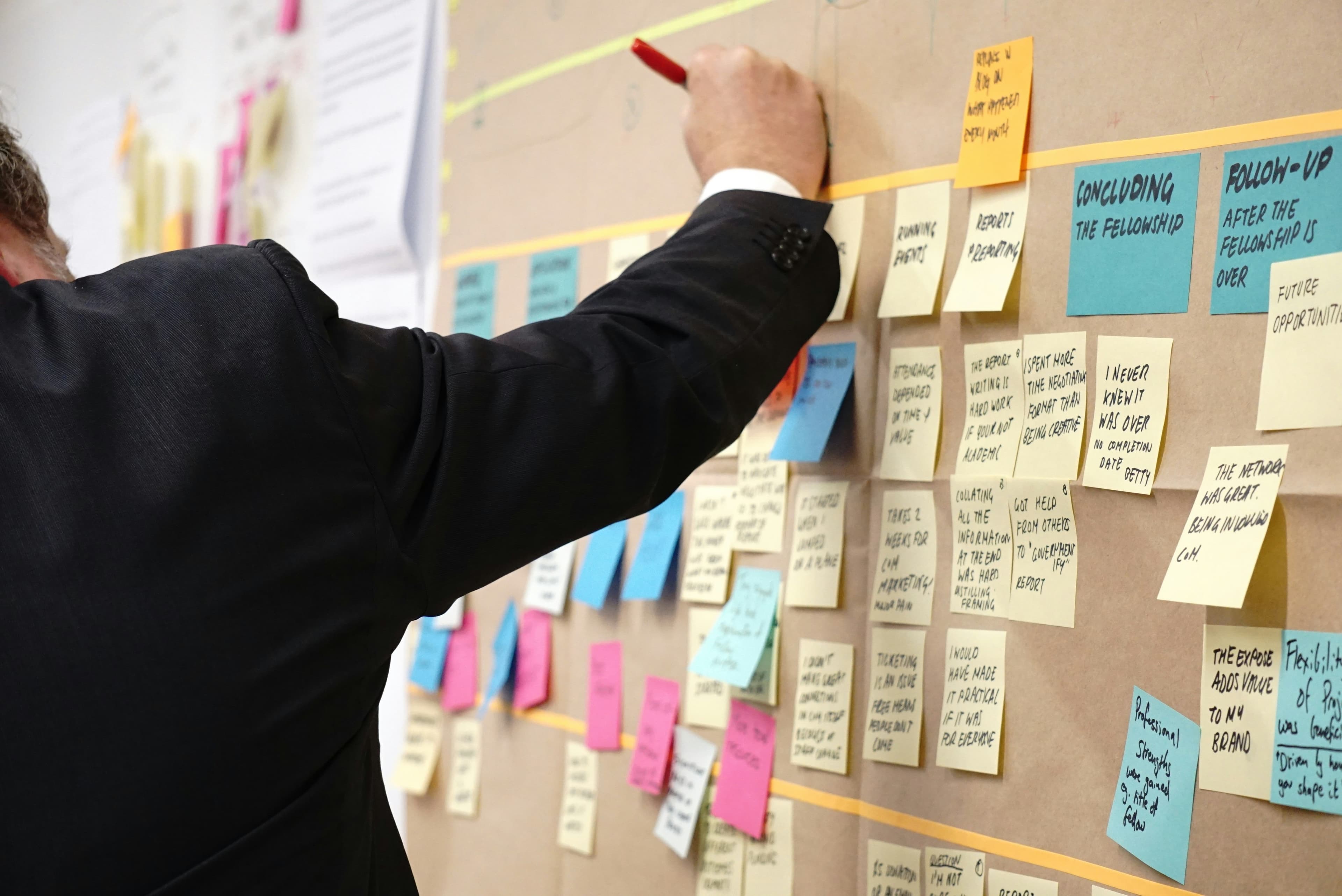
TL;DR: AI agent security does not start at the terminal approval prompt. It starts when a team decides which task, issue, comment, or spec is trusted enough to become executable context.
Most teams still talk about agent security as if it starts at the approval prompt.
An agent asks to run a command.
A human clicks yes or no.
Security achieved.
That is too late.
By the time the terminal prompt appears, the agent has already been shaped by the work item it was given, the instructions it could read, and the trust boundary the team created around its context.
The security model starts earlier.
It starts in the backlog.
If tasks, issues, pull request comments, repository notes, and specs are becoming executable context for coding agents, then backlog hygiene is no longer just an operations habit.
It is part of the security boundary.
A task is now a prompt with consequences
For years, backlog quality mostly changed team velocity.
A fuzzy ticket meant slower implementation, more back-and-forth, and a messier review.
Now it can do more damage than that.
A vague or untrusted work item can push an agent toward the wrong files, the wrong assumptions, or the wrong objective before a human even sees the branch.
GitHub's Copilot cloud agent docs make this shift explicit. The agent has access to code, can push changes to a repository branch, and needs mitigations around who can trigger it, what branch it can write to, how workflows run, and how prompt injection is handled.1
That is the useful signal.
The backlog is no longer passive paperwork.
It is part of the runtime.

Trusted context and untrusted text are not the same
This is where many teams will get sloppy.
They will treat a roadmap task, an issue opened by a teammate, a pull request comment from an outside collaborator, a copied stack trace, and a markdown file from a third-party repository as if they all belong to the same trust tier.
They do not.
A first-party task record that carries product intent, scope, and ownership is fundamentally different from arbitrary text sitting in a comment thread.
The same agent may be able to read both.
That does not mean both deserve the same authority.
GitHub's mitigations reflect that distinction. Comments from users without write access are not presented to the cloud agent. Hidden characters and HTML-comment tricks are filtered. Workflow runs stay gated until a human reviews and approves them.1
Those are not just implementation details.
They are a reminder that context itself has a trust level.
Once a team accepts that, the backlog starts to look less like admin cleanup and more like security infrastructure.
Bad backlog hygiene creates execution risk
The security failure mode is not only a dramatic prompt-injection exploit.
Sometimes it is quieter.
A task has the wrong scope. An issue references stale assumptions. A pull request comment carries a local workaround that should never become system behavior. A repository instruction file overgeneralizes what the agent is allowed to do. A copied requirement includes untrusted external text that nobody marked as such.
None of that looks like classic security work.
All of it changes what the agent may try to execute.
This is why the backlog belongs in the same conversation as permissions, approvals, and environment controls. The agent does not separate product context from execution context. It works from whatever trusted surface the team hands it.
If that surface is noisy, stale, or weakly governed, the risk shows up in the code.

Secure agent adoption needs a context model
The practical answer is not fear.
It is classification.
Teams need to decide which work records are trusted enough to become direct agent input, which records need a human rewrite first, and which text should be treated as untrusted reference material.
They also need to keep the chain visible.
Where did this task come from?
Who approved it?
What repository context was attached?
Which comments were treated as authoritative?
What external text was excluded or downgraded?
What review state did the work have before the agent started?
That may sound operational.
It is also security.
The cleaner the task record and the stronger the provenance, the less room there is for the agent to wander into bad intent wearing a legitimate issue number.
The real boundary is work intent
IBM Bob's April 2026 launch materials lean into full-lifecycle governance, security controls, auditability, and human-in-the-loop development.2 GitHub leans into scoped permissions and agent risk mitigations. Security researchers keep pointing at injection paths and trust failures.
All three are circling the same reality.
The dangerous part is not only what the model can do.
It is what the system decides to trust.
That is why backlog design is now part of the agent security model.
The issue is not whether every task must become a perfect spec.
It is whether teams know which task records are safe to execute from, which ones still need human cleanup, and how that trust decision gets enforced.
Agent security does not start at the approval prompt.
It starts when a team decides which work item is trusted enough to become executable context.
That is the security boundary that matters now.
That is also the reason we are building One Horizon around work objects instead of disconnected status updates.
Footnotes
-
GitHub Docs. "Risks and mitigations for GitHub Copilot cloud agent." https://docs.github.com/en/copilot/concepts/agents/cloud-agent/risks-and-mitigations ↩ ↩2
-
IBM Newsroom. "Introducing IBM Bob: AI Development Partner that Takes Enterprises from AI-Assisted Coding to Production-Ready Software." https://newsroom.ibm.com/2026-04-28-introducing-ibm-bob-ai-development-partner-that-takes-enterprises-from-ai-assisted-coding-to-production-ready-software ↩