Agile Methodology for Software Development Teams: A Deep Dive into What Works, What Breaks, and Why
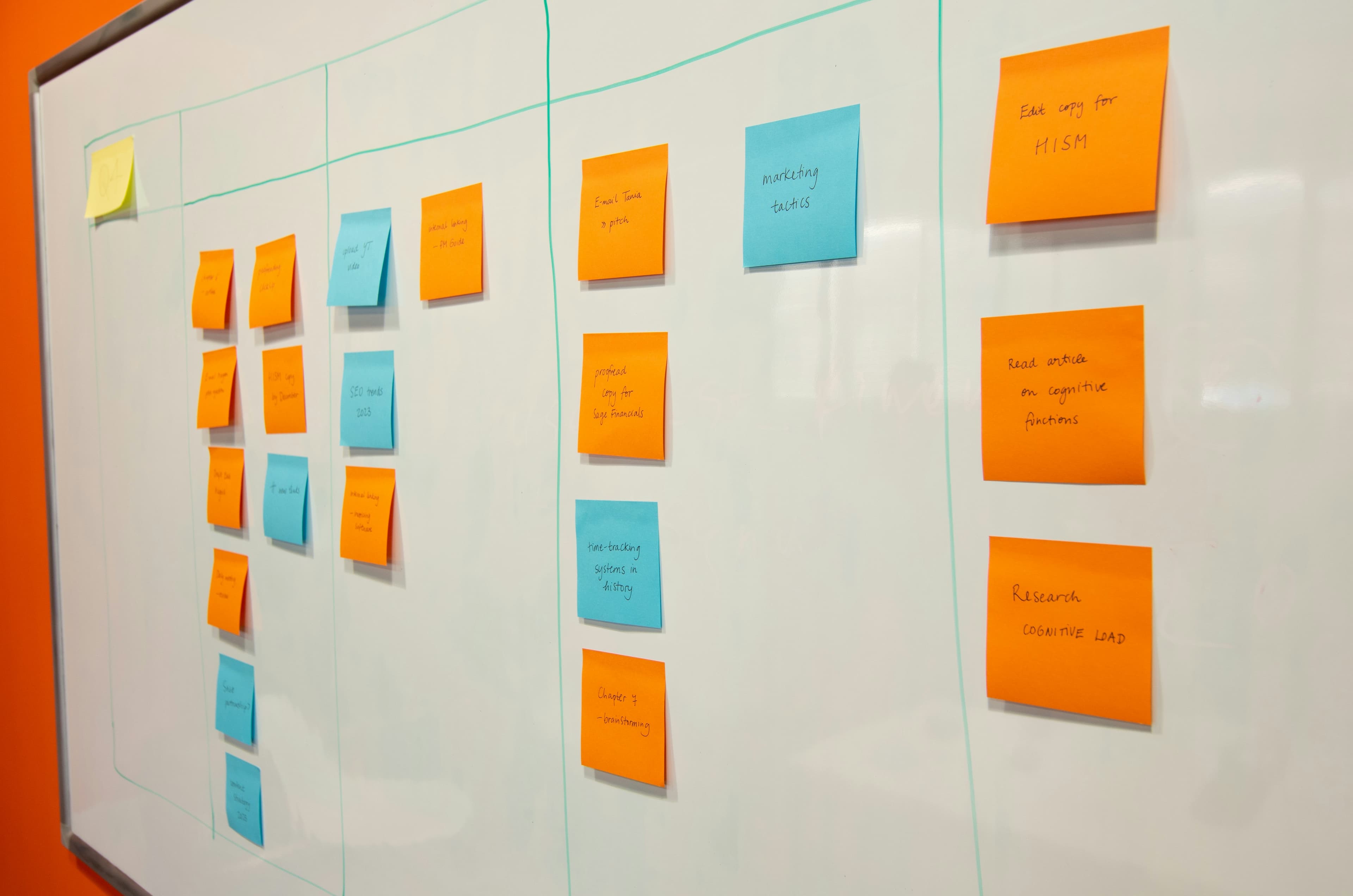
TL;DR: Agile works when it is treated as a learning-and-risk system across product, engineering, and leadership, not as a ceremony checklist.
Most software teams say they are agile. Far fewer can explain, in operational terms, why their way of working should produce better outcomes than a decent plan-driven model.
That gap is where most agile debates go wrong.
One side treats Agile as a set of ceremonies to comply with. The other side dismisses it as management theater because they have only seen bad implementations. Both reactions are understandable. Neither gets to the core.
Agile methodology, at its best, is a system for reducing uncertainty in complex product development. It works when teams shorten feedback loops, make real tradeoffs visible early, and keep technical quality high enough that change stays affordable. It fails when teams preserve the rituals but lose the learning.
This is a deep dive into the full system: what Agile actually is, how Scrum and Kanban fit, why engineering practices matter more than most process checklists, where scaling gets painful, and what leadership must do for Agile to remain a delivery advantage instead of a vocabulary exercise.
Agile Is A Learning System, Not A Ritual Set
The Agile Manifesto was written in 2001 as a reaction to heavy, document-led development models that often delivered too late and learned too slowly.1 Its four values are still the best shorthand for the method's intent: prefer people and collaboration, ship working software, collaborate with customers, and respond to change.
Those values are not anti-process. They are anti-process-as-a-substitute-for-learning.
The twelve principles make this more explicit. They center on early and continuous delivery, frequent working software, tight business-developer collaboration, sustainable pace, technical excellence, and regular adaptation.2 In plain terms, Agile assumes that in complex work, prediction quality improves only after you start delivering and observing real outcomes.
That assumption is the heart of the methodology. If a team is not using short cycles to generate evidence and adjust direction, it is not practicing Agile in any meaningful sense, no matter how many agile words appear in its Jira board.

Scrum, Kanban, And XP: Different Strengths Inside The Same Goal
Agile is the philosophy. Frameworks are implementations.
Scrum is the most widely recognized implementation pattern. The Scrum Guide defines it as a lightweight framework for complex problems, grounded in empiricism and lean thinking.3 It creates explicit opportunities to inspect and adapt through sprint cadence, and it pushes role clarity through Product Owner, Scrum Master, and Developers.
Kanban solves a different problem. The Scrum.org Kanban guidance frames it as a strategy for optimizing flow and as a complement to Scrum, not a replacement.4 Where Scrum gives you cadence and explicit planning/review points, Kanban sharpens flow visibility, queue discipline, and work-in-progress control.
Extreme Programming, meanwhile, focuses on engineering discipline: test-first habits, refactoring, collective ownership, and fast integration. In practice, strong teams blend these patterns. They may run Scrum-style planning and retrospectives, use Kanban-style flow limits for execution, and rely on XP-style engineering quality to keep the system stable under frequent change.
The wrong question is "Scrum or Kanban?" The right question is "Which constraints are currently throttling our learning speed and delivery reliability, and what mix addresses them?"
Where Agile Usually Breaks In Real Organizations
Most Agile failures are not caused by teams working too iteratively. They are caused by local optimizations that preserve organizational comfort while neutralizing Agile's core feedback loops.
A common example is what teams call sprinting but what is really mini-waterfall. Requirements are frozen upstream, engineering receives a pre-shaped backlog, and the sprint exists mostly to track execution against a plan that could no longer absorb new information. The team is "agile" on paper but cannot adapt where adaptation matters.
Another failure mode is ceremony inflation. Standups become status theater for management rather than coordination among builders. Sprint reviews become demos without decision-making. Retrospectives surface the same issues without structural follow-through. In that setup, events consume time but do not produce learning.
Then there is output obsession. Teams are told to optimize velocity points or ticket throughput while quality signals and customer outcomes are treated as secondary. Predictably, teams get better at feeding the metric rather than improving the system.
Agile starts failing the moment measurement and incentives drift away from value discovery and delivery quality.
Product Planning In Agile: Multiple Horizons, One Accountability Chain
A mature Agile setup does not reject planning. It separates planning horizons and keeps accountability explicit at each horizon.
At the long horizon, teams need strategic intent: which customer problems matter this quarter, which market bets are worth funding, and what constraints cannot be violated. At the medium horizon, teams shape outcomes into candidate increments and testable milestones. At the short horizon, teams commit to immediate slices that can be built, validated, and adapted within days or weeks.
The mistake many teams make is collapsing all horizons into one backlog. The result is either chaos from constant reprioritization or false certainty from over-specification. Good agile planning keeps strategic direction stable enough to align teams while keeping near-term execution flexible enough to learn.
That demands stronger product ownership than most teams expect. Product ownership is not "writing tickets." It is continuously deciding what problem is worth solving next, what evidence counts as progress, and what should be de-scoped when new data arrives.
A Concrete Agile Loop In Practice
To make this less abstract, imagine a product team trying to reduce checkout abandonment in a B2B SaaS app.
Week one starts with a hypothesis, not a feature mandate: reducing the number of required fields in the checkout flow will increase completed purchases from qualified users. The team slices this into a thin, releasable change behind a feature flag, adds instrumentation before shipping, and defines in advance what metric movement would count as signal versus noise.
Instead of waiting for a "big release," they ship the thin slice to a controlled cohort in days, not months. Mid-sprint, the data shows a lift in completion but a drop in average contract value among certain account types. That signal triggers adaptation. Product and engineering collaborate on a second slice that keeps the shorter path for self-serve customers while preserving guardrails for high-value accounts.
By the end of two short iterations, the team has not only shipped a change, it has learned which segment dynamics matter and which assumptions were wrong. That is Agile's real unit of progress: decision-quality improvement under real-world feedback, not simply ticket burn.
Engineering Practices Are The Real Agility Multiplier
A team can run flawless ceremonies and still be operationally slow if its engineering system makes change expensive.
This is the part many Agile transformations underinvest in. The process side is visible and easy to roll out. The engineering side is slower, messier, and far more consequential.
If build pipelines are slow, tests are brittle, environments are inconsistent, and architecture coupling is high, then each iteration carries hidden risk. Teams respond by batching changes, delaying integration, and avoiding refactors. That behavior erodes agility even when sprint rituals remain intact.
If, instead, teams invest in fast automated tests, tight CI loops, trunk-friendly integration patterns, and architecture that limits blast radius, then short-cycle delivery becomes safer. The team can learn faster because mistakes are cheaper to detect and recover.
DORA's current guidance is useful here. It tracks throughput and instability together, emphasizing that software delivery performance is about shipping both quickly and safely, not choosing one over the other.5 It also warns against metric gaming and one-number simplifications, which is exactly where many agile programs drift.

Metrics In Agile: Measure System Health, Not Team Obedience
Teams often ask which metrics are "agile metrics." That framing is less useful than asking what decisions the metrics should improve.
For delivery system health, lead time, deployment frequency, failure rates, and recovery times are practical because they expose friction and risk in the path from idea to production.5 For product impact, adoption, retention, task success, conversion, and support burden often matter more than sprint outputs.
The key is to keep metrics diagnostic, not punitive. Once a metric becomes a personal target disconnected from context, it stops informing and starts distorting behavior.
The DORA guidance is explicit on this point and calls out Goodhart-style failure patterns directly.5 For Agile teams, that principle is critical: use metrics to trigger better conversations about constraints, not to force teams to optimize one dashboard at the expense of reality.
Agile In Regulated And High-Compliance Environments
A common objection is that Agile works only in consumer SaaS environments with low compliance overhead. In practice, the opposite can be true: iterative delivery often reduces risk in regulated contexts because assumptions are validated earlier and audit trails can be strengthened continuously rather than assembled at the end.
What fails in these environments is "Agile by slogan," where teams claim flexibility but skip the discipline regulators care about. Strong teams treat quality evidence, security controls, and traceability as part of the increment definition, not as a downstream gate owned by another department.
The practical move is to integrate compliance and security specialists into the delivery loop as operating partners, not approval bottlenecks. When threat modeling, evidence capture, and policy checks are embedded into the same short cycles as feature work, teams can keep both delivery pace and control integrity. That is slower than cowboy shipping, but dramatically faster than discovering compliance drift late and rebuilding under deadline pressure.
Scaling Agile Means Managing Coordination Tax Deliberately
Agile methods were designed around small teams, and scale changes the physics. The coordination tax grows quickly as dependencies multiply, architectural boundaries blur, and non-engineering units impose different rhythms.
A systematic literature review by Dikert, Paasivaara, and Lassenius examined 42 industrial large-scale agile cases and reported broad challenge categories around coordination, organizational structure, architecture, requirements, and change management.6 Their core point still holds: scaling is not just "more teams doing Scrum." It is a socio-technical redesign problem.
This is why many scaled agile efforts stall. Organizations add framework layers and recurring cross-team meetings, but they do not redesign ownership boundaries, architecture interfaces, funding structures, and decision rights. They scale ceremony before they scale system clarity.
The pragmatic path is to scale in increments. Reduce coupling before adding synchronization rituals. Define product and platform boundaries clearly. Keep cross-team planning focused on dependency risk, not status presentation. Use shared review points to align outcomes, then push autonomy down to where decisions can be made fastest.

Leadership Is The Deciding Variable Most Teams Underestimate
In struggling agile environments, teams are often coached harder while leadership behavior stays unchanged. That rarely works.
If priorities are unstable, teams are interrupted constantly, and managers still reward heroic rescue over system improvement, no process tweak will fix delivery predictability. Agile requires leaders to create decision stability at the right horizon, remove structural blockers, and fund quality work that does not look like immediate feature output.
Recent DORA research keeps reinforcing this systems view. The 2024 report emphasizes stable priorities, user-centricity, and leadership conditions as major factors in software delivery outcomes.7 The 2025 report extends that logic into AI-assisted development, showing that AI amplifies the existing system: strong teams get more leverage, weak systems become unstable faster.8
That is also where current enterprise Agile conversations are heading. Digital.ai's 18th State of Agile release frames the same pressure from a different angle: stronger ROI scrutiny, rising AI adoption, and a governance gap between experimentation speed and organizational oversight.9 The sample is primarily large-enterprise coaches and consultants, so you should treat it as directional rather than universal, but the signal matches what many teams are experiencing.
In short, leadership decides whether Agile is treated as a business operating model or as a team-level process preference.
Agile In 2026: Faster Feedback, Higher Consequences
The AI wave is not replacing Agile methodology. It is increasing the cost of weak Agile implementations.
When planning, coding, and review loops speed up, teams can create and ship more change. That only helps if architecture, testing, ownership, and product decision-making are solid enough to absorb higher throughput without breaking stability.
This is why Agile fundamentals matter more now, not less. Short loops, clear goals, controlled WIP, strong technical practices, and honest retrospectives are the control system for a faster development environment.
Teams that internalize this see Agile as an adaptive system: they continuously tune process, architecture, and product signals together. Teams that miss it become what many engineers now call "agile theater with turbo mode": more movement, less certainty, and recurring quality debt.
How To Reboot Agile Without Starting Another Process Religion
If your team feels stuck, the highest leverage move is rarely adopting a new framework. It is restoring the original method logic.
Start by identifying where learning gets blocked today. Is it unclear goals? Poor backlog shaping? Slow test feedback? Cross-team dependency fog? Unstable priorities from leadership? Pick one systemic constraint, not ten, and improve it visibly. Then repeat.
Next, align process and engineering work instead of treating them as separate tracks. If your retrospectives repeatedly surface quality debt, those actions should be planned like product work, not left as goodwill tasks.
Then tighten the definition of value. Every iteration should answer a concrete question: what did we learn, what changed in customer reality, and what decision do we make next because of it.
That is Agile in practice. Not a static recipe. A disciplined loop for compounding learning and delivery reliability over time.
Final Takeaway
Agile methodology is not obsolete, and it is not automatically effective. It is a leverage system. In the right conditions it helps teams learn faster than uncertainty grows. In the wrong conditions it degrades into expensive ceremony.
Software development teams that get real value from Agile do three things consistently. They protect short feedback loops, invest in engineering practices that keep change safe, and hold leadership accountable for system conditions rather than team theater.
When those three stay intact, Agile remains one of the most practical ways to build complex software in a changing environment. When they disappear, no framework acronym will save you.
The Part Agile Teams Still Miss: Context Continuity
Most Agile systems do not break during sprint planning. They break on Wednesday afternoon, when a decision in Slack never reaches the backlog, a blocker in standup never reaches leadership, and a merged PR never updates milestone confidence.
That is where teams silently lose agility. Not because they skipped a ceremony, but because execution context gets fragmented across tools and people. You can run clean sprints and still discover risk too late when planning, engineering, and delivery signals never meet in one place.
This is exactly the layer One Horizon is designed to solve. It links initiatives, planning artifacts, task movement, standup blockers, commits, pull requests, and release signals into one live execution narrative. When dependency risk builds, it shows up as initiative risk immediately instead of hiding inside scattered comments and status meetings.
If your team is running Agile ceremonies but still flying blind between planning and execution, One Horizon is the missing operating layer.
See it in action
Footnotes
-
Manifesto for Agile Software Development. https://agilemanifesto.org/ ↩
-
Principles behind the Agile Manifesto. https://agilemanifesto.org/principles ↩
-
Scrum Guide 2020 (Schwaber & Sutherland). https://scrumguides.org/docs/scrumguide/v2020/2020-Scrum-Guide-US.pdf ↩
-
Kanban Guide for Scrum Teams (Scrum.org resource page). https://www.scrum.org/resources/kanban-guide-scrum-teams ↩
-
DORA software delivery performance metrics guide (updated January 5, 2026). https://dora.dev/guides/dora-metrics/ ↩ ↩2 ↩3
-
Dikert, Paasivaara, Lassenius (2016). Challenges and success factors for large-scale agile transformations: A systematic literature review. Journal of Systems and Software. https://acris.aalto.fi/ws/portalfiles/portal/11744469/1_s2.0_S0164121216300826_main.pdf ↩
-
DORA Research 2024 report page (last updated April 13, 2026). https://dora.dev/research/2024/dora-report/ ↩
-
Google Cloud blog: Announcing the 2025 DORA Report (September 23, 2025). https://cloud.google.com/blog/products/ai-machine-learning/announcing-the-2025-dora-report ↩
-
Digital.ai press release: 18th State of Agile Report (October 28, 2025). https://digital.ai/press-releases/digital-ais-18th-state-of-agile-report-marks-the-start-of-the-fourth-wave-of-software-delivery/ ↩