The Agent-Ready Backlog
TL;DR: The next bottleneck in AI-assisted engineering is not whether agents can write code. It is whether the backlog can tell a team which work is safe to delegate, which work needs human shaping first, and which work should not be handed to an agent yet.
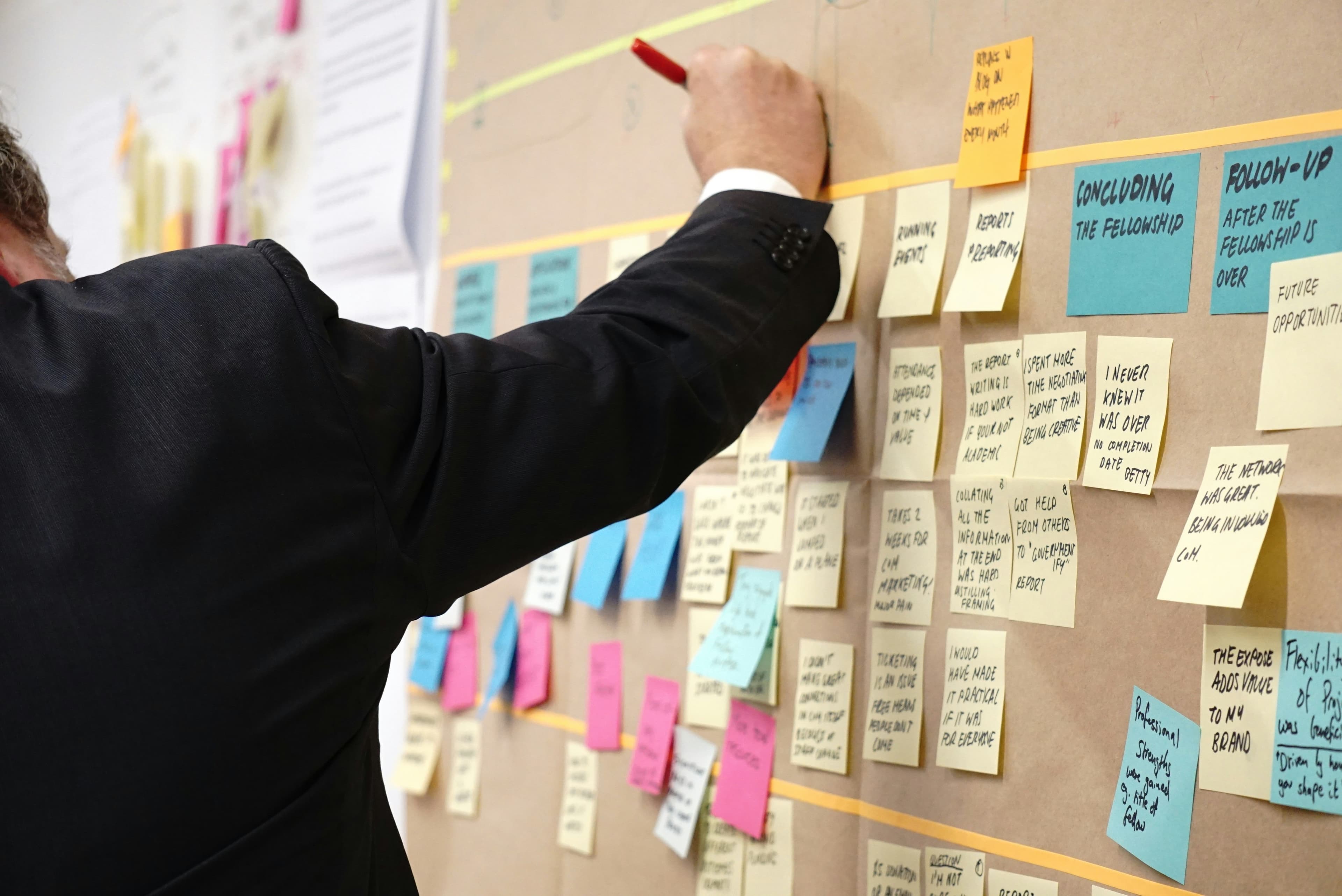
The backlog used to be a waiting room.
Work sat there until a human picked it up, asked the missing questions, remembered the relevant Slack thread, noticed the weird product constraint, and quietly turned a messy task into something buildable.
That was already fragile.
AI coding agents make it obvious.
GitHub Copilot coding agent can work in the background and return with a pull request. OpenAI Codex can carry work forward across tools, plugins, memory, and automations. The interface is getting smoother. The agents are getting more patient. The cost of turning a task into code keeps falling.12
But that does not make every backlog item ready.
It makes readiness matter more.
Because the moment an agent can pick up ten tasks while you are doing something else, the backlog stops being a planning artifact. It becomes the assignment surface for automated work.
And most backlogs were not written for that job.
The Backlog Is Becoming The Prompt Surface
For a long time, the ticket was only one piece of the work.
It named the thing. It gave the team a place to discuss it. It maybe carried acceptance criteria if everyone was being disciplined that week. But it was rarely the full execution contract.
Humans filled the gaps.
A developer knew that the billing code had a historical scar. A staff engineer knew which migration pattern was safe. A designer knew the interaction should not follow the old settings page. A PM knew the customer request was really about onboarding friction, not the checkbox named in the issue.
AI agents do not get that context by osmosis.
They get the task, the repo, the instructions, the tools, and whatever surrounding context the system gives them.
That changes the role of the backlog. A vague issue is no longer just a productivity tax on a future developer. It is a bad prompt waiting to become a branch.
GitHub's own guidance makes this unusually plain: if you assign an issue to Copilot, it helps to think of the issue as a prompt. The issue has to contain enough context for the agent to make the required change, not merely enough text for a human teammate to infer what you meant.3
That is the useful mental shift.
The backlog is not just where work waits.
It is where the agent learns what work is.
Agent-Ready Does Not Mean Easy
The obvious trap is to translate "agent-ready" into "easy."
That is too crude.
Some easy-looking tasks are bad agent tasks. A one-line production config change can be dangerous if the agent does not understand the release path, credential boundary, customer impact, or rollback plan.
Some boring tasks are excellent agent tasks. Documentation updates, test coverage, mechanical migrations, contained UI fixes, accessibility improvements, and narrow tech debt work often have the shape agents handle well: local context, clear output, low ambiguity, and easy review.
GitHub recommends starting Copilot cloud agent on simpler work such as bugs, UI adjustments, test coverage, documentation, accessibility, and technical debt. It also calls out broad refactors, legacy dependency problems, domain-heavy tasks, sensitive work, and large design-consistency changes as better candidates for human ownership.3
The research points in the same direction.
A 2026 arXiv paper on issue readiness for Copilot found that successful agent work tended to start from issues that were well scoped, clear, and included guidance about relevant artifacts and implementation direction. It also found that issues involving external references such as configuration, dependencies, context setup, or external APIs were associated with lower merge rates, which is a useful warning: outside complexity raises the price of delegation.4
Another 2026 study of agent-authored pull requests found that documentation, CI, and build-update tasks had the highest merge success, while performance and bug-fix tasks were harder. Not-merged pull requests tended to touch more files, change more lines, fail CI more often, and receive more revision churn.5
That does not mean agents should only do tiny chores forever.
It means agent readiness is not a vibe.
It is a task property.
Can the work be bounded?
Can the agent see enough context?
Can the result be tested?
Can a human review it without reconstructing the whole history of the product?
Can the team recover if the agent is wrong?
If the answer is yes, the task may be agent-ready. If the answer is no, the task may still be useful for AI, but it needs a different mode.

Good Task Shape Starts With Intent And Scope
The first signal is source of intent.
Where did this work come from?
A roadmap initiative, a customer bug, a failed build, a security finding, a review follow-up, and a speculative cleanup all need different handling. They should not look identical to an agent.
If a task comes from a customer-facing roadmap bet, the agent needs the product reason and the acceptance boundary. If it comes from a bug report, it needs reproduction steps and regression expectations. If it comes from a security finding, it needs the control boundary and the verification path. If it comes from technical debt, it needs a strict non-goal list so it does not wander into a refactor nobody asked for.
The second signal is scope.
Agents are tireless in a way humans are not. A human developer may stop when the task starts feeling suspiciously broad. An agent may keep making adjacent changes because they look helpful.
That is why agent-ready tasks need a visible boundary:
what to change, what not to change, which files or modules are likely relevant, which behavior must remain untouched, and what kind of output counts as done.
"Clean up the settings page" is not agent-ready.
"Replace deprecated form field components in the account settings page, keep the current validation behavior, do not change billing settings, and add a regression test for disabled fields" is much closer.
The difference is not word count.
The difference is judgment already encoded into the task.
That is the part teams miss when they treat agent delegation as a button. The button only works well after someone has decided what kind of work this is.
GitHub's WRAP guidance for Copilot coding agent lands on the same operational pattern: write effective issues, refine instructions, break large work into atomic tasks, and pair the agent with human judgment instead of dumping the whole backlog into an unattended queue.6
Risk Decides The Mode
The useful backlog of the agent era needs more than priority.
Priority tells the team what matters.
Risk tells the team how the work should move.
A task can be high priority and still not be agent-ready. A task can be low priority and perfect for an agent. A task can be urgent but require a human plan first, with an agent used later for test coverage, migration scripts, or implementation variants.
A practical split looks like this:
| Lane | Good fit | Human job |
|---|---|---|
| Agent-ready | Localized changes, clear tests, low blast radius, reversible output, obvious success criteria | Review the result and decide whether it matches intent |
| Agent-assisted | Medium-risk work with hidden product, platform, release, or domain constraints | Shape the plan, set boundaries, then delegate contained slices |
| Human-first | Broad architecture, sensitive data, production permissions, cross-repo impact, legal risk, major product judgment | Make the core decision before any agent writes code |
This is not anti-agent.
It is how you use agents without making review unbearable.
The industry is already moving toward more nuanced execution modes. GitHub Copilot coding agent now has model selection, self-review, built-in security scanning, custom agents, and cloud/local handoff. OpenAI Codex is adding more plugins, memory, automations, and ways to keep long-running work alive across tools.12
Those capabilities are useful.
They also make the assignment decision more important.
If a task is agent-ready, send it.
If a task is agent-assisted, use AI after a human turns the ambiguity into structure.
If a task is human-first, do not pretend the model is the missing product judgment.
The mature move is not "agents do everything."
The mature move is knowing which lane the work belongs in before anything starts running.
Evidence Belongs In The Task, Not The Aftermath
A lot of teams treat evidence as something the agent produces at the end.
Tests passed.
Files changed.
Summary written.
Pull request opened.
That is useful, but it is late.
Agent-ready backlog items should name the evidence before the agent starts. The task should say what proof will make the work reviewable: the failing test to reproduce, the unit test to add, the screenshot to capture, the benchmark to compare, the migration command to run, the accessibility behavior to check, the feature flag to preserve, the rollback path to document.
Otherwise the agent has to guess what kind of proof matters.
And if the agent guesses wrong, the reviewer pays.
This is where a lot of AI workflow demos feel cleaner than production work. The demo ends when the patch compiles. Real work continues into review, release, customer behavior, incident risk, and the next person trying to understand why this changed.
An agent-ready task should make that downstream review easier.
It should tell the agent what evidence to gather.
It should tell the reviewer what evidence to expect.
It should tell the team what still needs human judgment.
That last part matters most. Passing CI does not prove the work is right. It proves one class of failure did not happen. Product fit, release timing, customer impact, policy risk, and architectural direction still belong to people.
The task should make that boundary visible.

Where One Horizon Fits
One Horizon is not interesting here because it can attach "AI" to a ticket.
That is the cheap version.
The useful version is making the task carry the context an agent and a reviewer both need.
Source of intent.
Scope boundary.
Risk lane.
Expected evidence.
Owner and escalation path.
Links back to the roadmap, product goal, customer signal, bug, pull request, release, and recap.
That is not surveillance. It is not another status ritual. It is the shared record that lets humans and agents work from the same version of reality.
The more AI coding agents become background agents, the less tolerable vague work becomes. A vague task used to create a meeting, a Slack thread, or a slow handoff. Now it can create a pull request.
That is faster.
It is not automatically better.
The teams that get value from agents will not be the teams with the biggest prompt library or the highest agent count. They will be the teams whose backlog can tell the difference between work that is ready to execute, work that needs shaping, and work that still requires human judgment.
That is the agent-ready backlog.
Not a prettier ticket queue.
A control surface for deciding what should happen next.
And that is exactly the layer we are building at One Horizon.
Footnotes
-
GitHub. "What's new with GitHub Copilot coding agent." Published February 26, 2026. GitHub describes model selection, self-review, built-in security scanning, custom agents, and cloud/local handoff for Copilot coding agent. https://github.blog/ai-and-ml/github-copilot/whats-new-with-github-copilot-coding-agent/ ↩ ↩2
-
OpenAI. "Codex for (almost) everything." Published April 16, 2026. OpenAI describes Codex plugins, automations, memory, and context-aware suggestions for carrying work forward over time. https://openai.com/index/codex-for-almost-everything/ ↩ ↩2
-
GitHub Docs. "Best practices for using GitHub Copilot to work on tasks." GitHub recommends thinking of an assigned issue as a prompt and starting with simpler task types before assigning complex, broad, sensitive, or domain-heavy work. https://docs.github.com/en/enterprise-cloud@latest/copilot/tutorials/cloud-agent/get-the-best-results ↩ ↩2
-
Mohammed Sayagh. "What Makes a GitHub Issue Ready for Copilot?" arXiv, December 24, 2025. The paper studies criteria for issue readiness and reports that merged Copilot work tends to originate from clearer, better-scoped issues with guidance and artifact hints. https://arxiv.org/abs/2512.21426 ↩
-
Ramtin Ehsani, Sakshi Pathak, Shriya Rawal, Abdullah Al Mujahid, Mia Mohammad Imran, and Preetha Chatterjee. "Where Do AI Coding Agents Fail? An Empirical Study of Failed Agentic Pull Requests in GitHub." arXiv, January 21, 2026. The study examines more than 33,000 agent-authored pull requests and reports that task type, CI results, change size, and review dynamics affect merge outcomes. https://arxiv.org/abs/2601.15195 ↩
-
GitHub. "WRAP up your backlog with GitHub Copilot coding agent." GitHub describes a WRAP model covering effective issues, refined instructions, atomic tasks, and human/agent pairing for backlog work. https://github.blog/ai-and-ml/github-copilot/wrap-up-your-backlog-with-github-copilot-coding-agent/ ↩