Why Selling Software Development Is Harder Than Ever (And How the Best Devshops Win Trust)
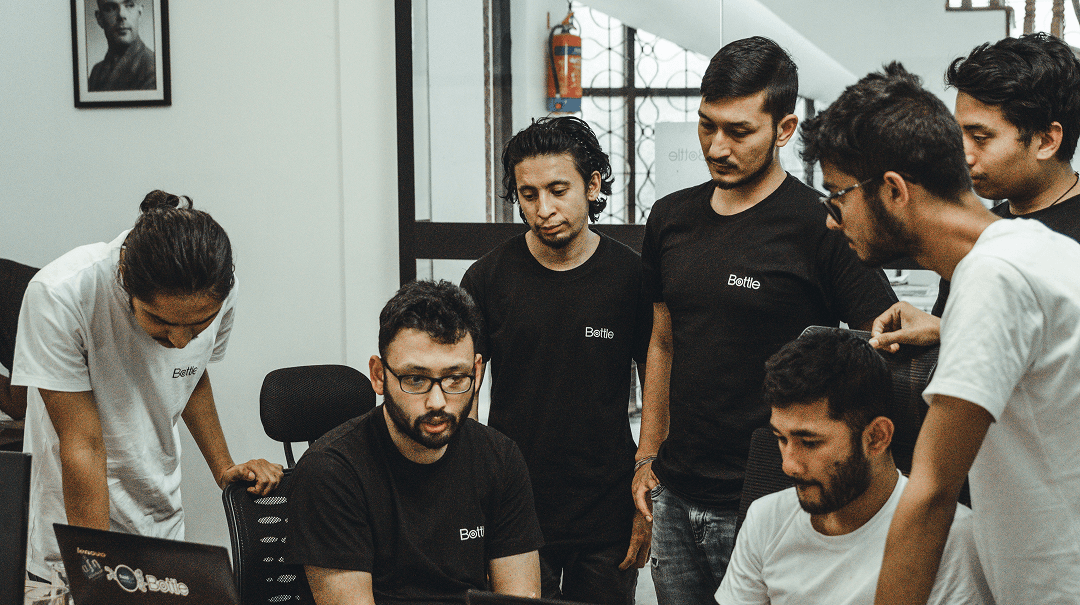
At the end of last year I attended Web Summit and Slush for the first time.
What surprised me most was not the size of the events or the number of startups. It was how crowded they were with devshops. Booth after booth. Pitch after pitch. Different logos, different names, but almost identical stories.
Everyone was selling great engineers.
Everyone had strong case studies.
Everyone promised speed, quality, and ownership.
Walking those floors made one thing painfully clear: this market is saturated, and standing out is brutally hard for them. If you are running or selling a devshop today, you are not just competing on talent. You are competing on credibility.
That experience is what triggered this article.
“Why should we trust your developers?”
It is the question almost every devshop hears, even if the client never says it out loud.
You can show polished case studies.
You can talk about seniority, culture, and hiring bars.
You can promise velocity, ownership, and impact.
And still, the deal stalls.
Selling software development in 2026 is not primarily a sales problem. It is a trust problem.
The market is crowded. Every agency claims to have strong engineers. Every pitch sounds reasonable. From the client’s perspective, there is almost no way to verify quality up front. They only find out months later, when the code is already in production or the deadline has slipped.
This article is about why that happens, what the best engineering partners do differently, and how devshops can move from “just another option” to the safest choice in the room.
The uncomfortable reality of the devshop market
Let’s be honest about the environment devshops operate in.
- Supply is high. There are thousands of agencies competing globally, if not more.
- Differentiation is weak. Tech stacks and roles look identical on paper.
- Buyers are skeptical. It's often easier to just do the work in-house.
- Risk is asymmetric. Clients risk product failure. Devshops risk reputation.
From the outside, most devshops look interchangeable. Same roles. Same tools. Same promises.
Clients do not doubt that work will happen. They doubt how well, how predictably, and how visible that work will be.
That doubt is rational.
Why trust is so hard to establish up front
Software development has a unique problem compared to other professional services.
You cannot inspect the output before you buy it.
A design agency can show mockups.
A marketing agency can show funnels and metrics.
A manufacturing partner can show samples.
A devshop sells future behavior.
The client is asked to believe that:
- the engineers will make good technical decisions
- progress will be steady
- problems will surface early
- quality will remain high under pressure
None of that is visible during the sales process.
So buyers fall back to proxies:
- brand names
- references
- seniority claims
- rate comparisons
Those proxies are weak. Everyone has them.
The hidden cost of low visibility
Once a project starts, a second problem appears.
Clients want answers to simple questions:
- What changed this week?
- Why was this work prioritized?
- Are we on track?
- Is the team actually productive?
Devshops often answer these questions manually:
- status meetings
- slide decks
- hand written reports
- Slack updates stitched together under pressure
This creates friction on both sides.
Engineering managers lose time reporting instead of leading.
Clients still feel unsure, because updates are subjective and delayed.
The irony is that the data already exists.
It lives in tools like GitHub, Jira, Linear, Slack, and calendars. These tools are not the problem. They are doing exactly what they are designed to do.
The problem is that no one connects the dots into a coherent & validated story of output and impact.
What high performing devshops do differently
The strongest devshops do not try to sound more confident. They reduce the need for confidence altogether.
They focus on three principles.
1. They sell predictability, not just skill
Senior engineers matter, but predictability matters more.
Clients want to know:
- how often value is delivered
- how work flows through the system
- how quickly issues are detected
The best devshops talk about delivery cadence, feedback loops, and learning speed. Not just resumes.
2. They make work observable
High trust partners do not hide behind meetings.
They make progress visible through:
- small, frequent changes
- clear ownership
- written context around decisions
- consistent updates tied to actual work
When clients can see momentum, anxiety drops.
3. They align output with goals
Activity alone is not convincing.
Commits, tickets, and messages only matter when connected to outcomes:
- features shipped
- incidents prevented
- risks reduced
- milestones reached
The best devshops continuously tie engineering output back to business intent.
The IP and knowledge concern nobody likes to say out loud
There is another objection many buyers have, especially founders, CTOs, and investors.
“Is it actually a good idea to let outsiders work on our core product?”
This is not just about legal ownership of IP. Contracts can usually solve that part. The deeper concern is knowledge leakage.
- Critical architecture decisions live in external heads
- Product context sits outside the company
- Velocity depends on people who are not on payroll
For early stage companies, this can feel risky. For later stage companies, it can become a red flag. During due diligence, investors or potential acquirers often ask how much of the core system is built and understood internally.
Heavy dependency on a devshop without clear ownership and traceability can hurt valuation.
How strong devshops address this head on
The best engineering partners do not avoid this topic. They design for it.
They focus on:
- clear documentation of decisions and tradeoffs
- explicit ownership boundaries
- transparent history of why the system looks the way it does
- making themselves replaceable over time
Paradoxically, the easier it is to replace a devshop, the more trustworthy it becomes.
When clients can see what was built, why it was built, and how knowledge is captured, the fear drops. The devshop becomes a partner, not a dependency.
Visibility is not just about delivery. It is about protecting the long term health of the product.
As a client, even though you can now easily replace them, you don't want to. Why would you, if the partnership works so well?
Common best practices that actually help
If you run or sell a devshop, these practices make a real difference.
Keep changes small and frequent
Large drops create uncertainty. Small changes create confidence.
Encourage engineers to:
- ship incrementally
- explain intent in pull requests
- surface tradeoffs early
This improves both delivery and communication.
Document decisions lightly but consistently
Clients do not want documentation for documentation’s sake.
They want to understand:
- why something was done
- what alternatives were considered
- what risks exist
Short, structured context beats long explanations.
Replace subjective updates with objective signals
“Good progress” means nothing.
Concrete signals help:
- what shipped
- what is blocked
- what is planned next
- what changed compared to last week
When updates are grounded in actual work, trust compounds.
Respect the tools your teams already use
Slack, GitHub, Jira, Linear, and calendars are not overhead. They are the operational backbone of modern engineering teams.
The goal is not to replace them. The goal is to interpret them correctly.
The real gap is not productivity, it is proof
Most devshops are already doing good work.
The problem is not effort.
The problem is not intent.
The problem is not tooling.
The problem is proof.
Without a reliable way to show:
- consistent output
- validated progress
- connection between work and outcomes
clients are left guessing.
Guessing slows deals. Guessing increases churn. Guessing damages long term relationships.
Where this usually breaks down
Manually producing insight does not scale.
As teams grow and projects multiply:
- reporting becomes inconsistent
- context gets lost
- updates become subjective
- trust erodes quietly
Engineering leaders feel this pressure first. Sales feels it later, when deals stall or renewals become tense.
This is where many devshops plateau.
Making trust effortless
The best outcomes happen when trust is not something you argue for, but something the system produces automatically.
When:
- output is continuously measured
- work is validated across tools
- progress is summarized without manual effort
- clients see reality, not reassurance
trust becomes a byproduct of how you operate.
That is the direction the market is moving toward.
A quiet advantage
Some devshops already operate this way.
They do not oversell.
They do not hide.
They let their delivery speak for itself.
Platforms like One Horizon exist to make that approach practical. By connecting the tools teams already use and turning raw activity into validated, contextualized reporting, it becomes much easier to prove what is happening without adding process or meetings.
Not louder sales.
Just clearer signals.
In a crowded market, that difference compounds faster than any pitch ever will.
Sign up